
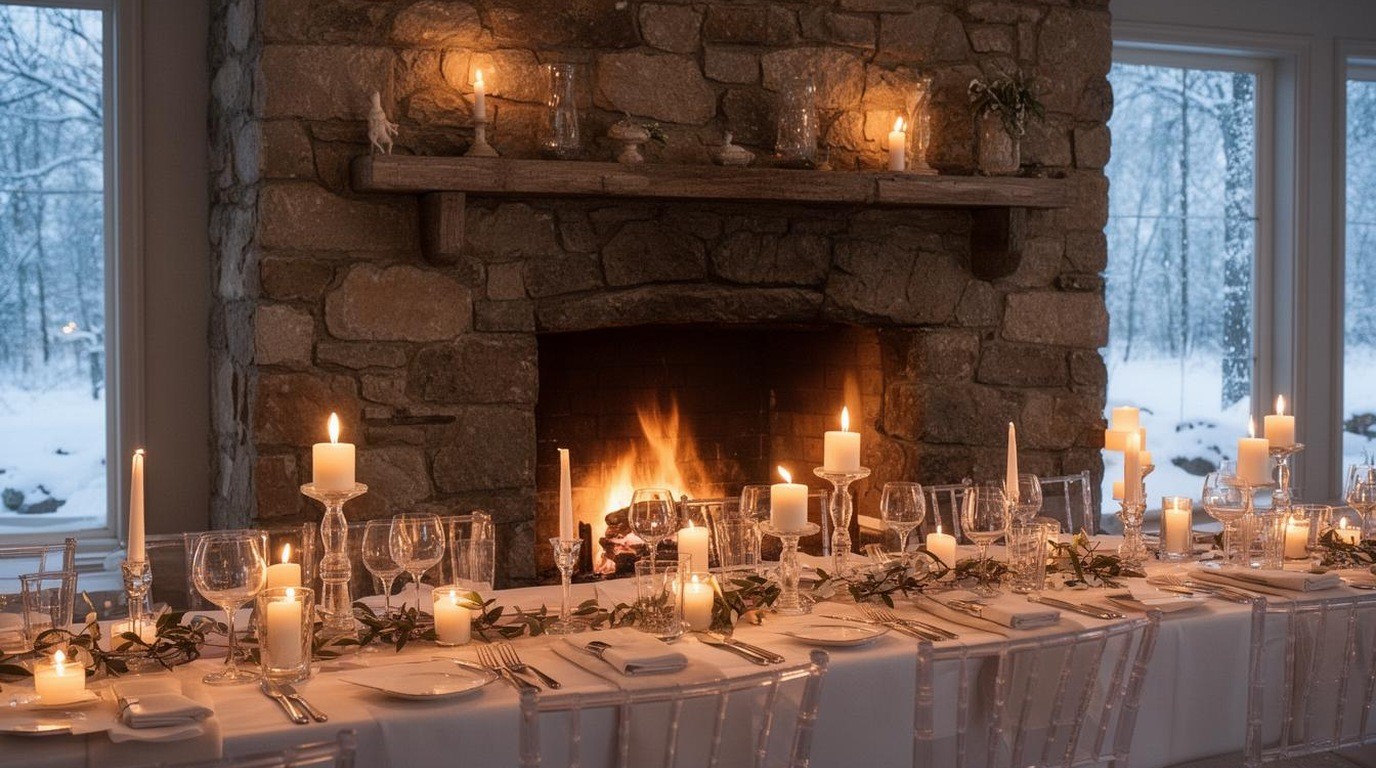
A winter wedding has a quiet charm that summer weddings rarely match. Candlelit rooms, evergreen décor and a sense of intimacy can make a December or February celebration feel warm and personal. The same season also brings shorter days, unpredictable weather and guests who must travel through snow or ice. A winter date works beautifully when the logistics are planned as carefully as the décor.
This guide covers the three areas that shape most winter weddings: the venue and its heating, the travel needs of guests and the timing of photography and transport. It describes general planning considerations rather than the policies of any specific venue or vendor. Confirm the details of every booking in writing, and read contracts carefully before signing.
Read this if you are planning a wedding for December, January or February and want to plan heating, travel and daylight. You can skip it if your wedding is in a warm season with no winter travel concerns.
Choose a venue that can handle the cold
Heating is the first question to ask a venue. Ask how the building is heated, how quickly the rooms warm up and whether the system can keep the space comfortable for a full day with a large crowd. Older buildings with high ceilings can take a long time to warm and may feel drafty near doors and windows. Ask to visit the venue in the same season as your wedding, if you can, so you see the conditions as guests will.
Check the outdoor spaces too. A garden or terrace may be beautiful in photographs but unusable in snow or freezing rain. Confirm whether there is an indoor backup plan, and whether the venue has a clear policy for weather changes. Ask whether the parking area is cleared and lit, and whether there is shelter for guests waiting for a ride.
Plan for guest travel
Guests traveling in winter face delays, cancellations and slippery roads. Share the date early, so people can book flights or trains at reasonable prices and build in time for weather. Provide a short list of nearby hotels, with a note about distance and parking, and consider a room block if the venue is far from town. Include a clear schedule with arrival and departure times, so guests know when to leave for the event.
Think about older guests and those with mobility needs. Shorter walking distances, indoor waiting areas and clear, cleared paths make a big difference. A few simple notes in the invitation or the website can prevent a lot of stress on the day.
- Venue heating. Winter consideration: Warm-up time and comfort. What to confirm: Heating capacity and room temperature.
- Outdoor spaces. Winter consideration: Snow, ice and daylight. What to confirm: Backup indoor area and lighting.
- Guest travel. Winter consideration: Delays and road conditions. What to confirm: Hotel options and a flexible schedule.
- Parking and access. Winter consideration: Clearing and lighting. What to confirm: Snow removal and drop-off area.
- Photography. Winter consideration: Short daylight hours. What to confirm: Timing for golden hour and indoor light.
Plan the light and the timing
Daylight is short in winter, and that affects photography, transport and the schedule. Plan the ceremony and the key photos around the available daylight, or choose a time when the light is warm and indirect. Ask your photographer about low-light shooting and whether they have experience with winter venues. Build a little extra time into travel between locations, since traffic and weather can slow everything down.
Warmth and comfort for the day
A cold room is uncomfortable for guests and can be hard on bridal party members in lighter clothing. Consider warm drinks, blankets for outdoor moments and a coat check. A simple shawl or wrap can make a long ceremony much more pleasant for everyone. Our guide to wedding guest lists and budgets explains how to plan the numbers before you book, so the venue heating and seating are sized correctly.
Build a winter backup plan
Every winter wedding should have a backup for snow, ice and cancelled transport. Ask the venue and each vendor what happens if the weather turns, and agree on the decision point in advance. Consider a plan for guests who cannot travel, such as a live stream, and make sure the most important people can reach the venue even if the roads close.
Keep a copy of the contacts for the venue, the transport company and the key vendors on hand on the day. A list printed in the planner is a useful backup if phones lose signal.
Photography in low light
Winter light is soft and short, and photographers need time and equipment to capture the day well. Ask your photographer about their experience with low light, and whether they bring lighting or work with fast lenses. Plan key portraits for the brightest part of the day, and consider a first look or a short outdoor session while daylight lasts. Indoor photos depend on the venue’s lighting, so visit the space in the evening if you can.
Guest comfort and transport
Guests spend more time in the cold than they might expect, moving between the car, the entrance and the reception. Provide a covered drop-off area, and let guests know where to wait for shuttles or taxis. A coat check and a few blankets near the entrance make arrival easier. Consider a short information sheet that covers the weather, so everyone knows what to expect.
Putting it together
Plan a winter wedding around heating, travel and daylight. Ask the venue how quickly it warms, make travel easy for guests with clear information and schedule photos and key moments for the available light. Keep a backup plan for snow and ice, and make the room comfortable with warm drinks and wraps. A winter celebration feels special when the planning makes everyone comfortable, and our guide to a twelve-month wedding timeline helps you build that planning into a calendar.
Winter wedding mistakes
- Booking a venue without asking how quickly the rooms warm up.
- Planning photos for daylight that ends early in winter.
- Forgetting to plan covered drop-off and parking in snow.
- Assuming guests will travel easily in bad weather.